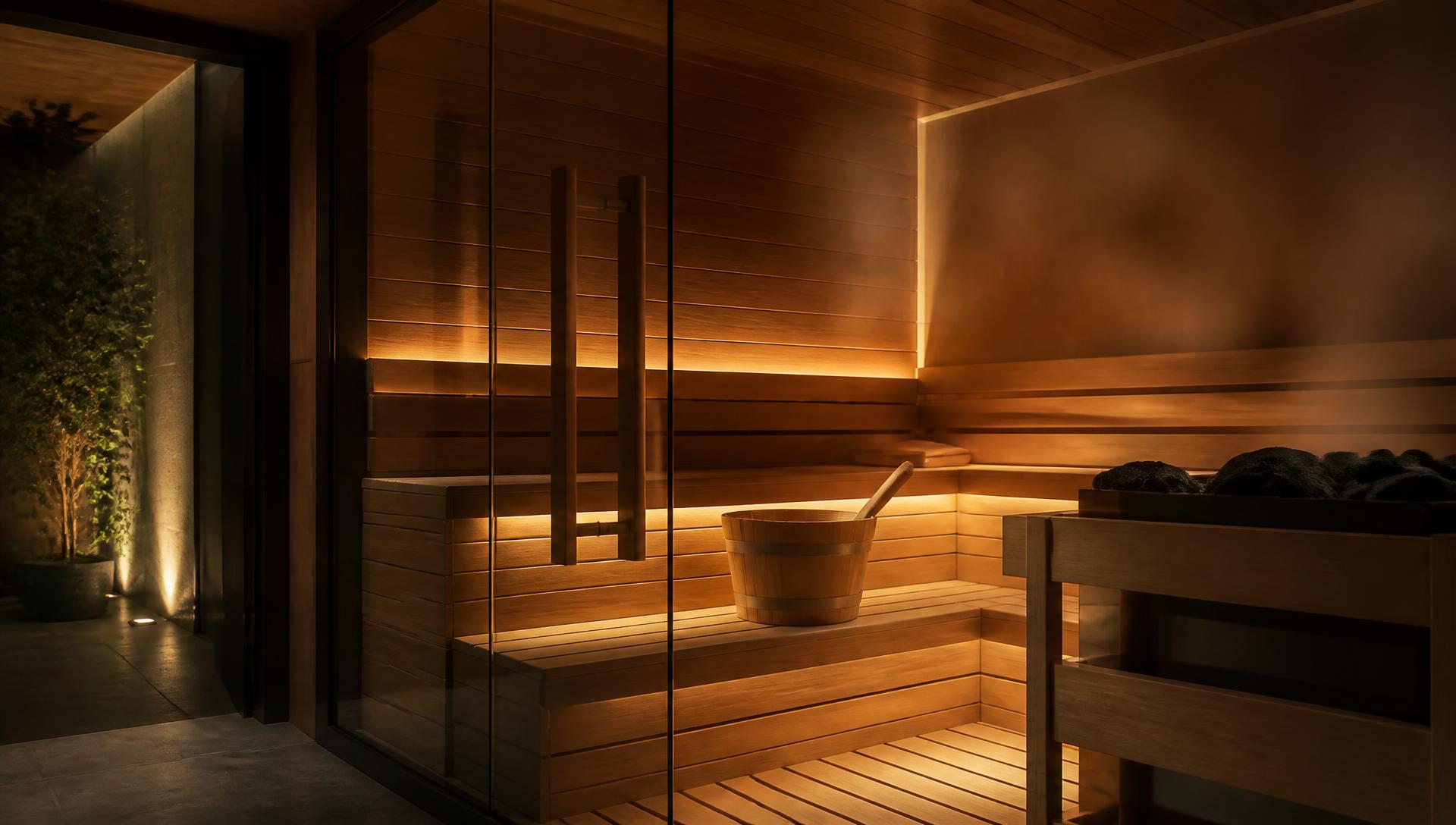
Luxury Home Wellness · 12 minute read
The Complete Guide to Creating a Luxury Home Sauna
A home sauna is a building decision as much as a wellness one. This guide walks through the sequence most people wish they had followed: space and access first, heat and services second, finishes last.
Very few home saunas go wrong because the wrong cabin was chosen. They go wrong because the room could not ventilate properly, the electrical supply could not carry the heater, the door swung into the only usable circulation space, or nobody planned how the floor would dry.
This guide is a decision framework, not a shopping list. It is written to be used before you request quotations, so that the quotations you receive are comparable and the supplier conversations are precise.
“Very few home saunas go wrong because the wrong cabin was chosen. They go wrong because the room could not support it.”
Start with the space, not the sauna
Measure the room you intend to use, then measure what you can actually get into it. Cabin sections, benches and heaters have to travel through doorways, around stair returns and past fixed obstructions. Access is the single most common reason a specification changes late.
Note ceiling height as well as floor area. Heat behaves very differently in a low room, and bench height is set relative to the ceiling rather than the floor, so a lower room usually means a lower upper bench and a different experience.
- Internal floor area, ceiling height and any slope or step
- Narrowest point on the delivery route, including turns and doorway widths
- Position of existing services, drains, windows and openings
- Where a door can swing without blocking circulation
- Whether the floor build-up can take the finished weight and get wet
Indoor or outdoor — decide early
Placement changes almost every downstream decision: how services are run, how the structure is protected, how the space is used year-round and how much groundwork is involved. Our companion guide covers this trade-off in detail.
Heat type: traditional, infrared or hybrid
Traditional saunas heat the air with an electric or wood-burning heater and stones, and allow water on the stones for humidity. Infrared cabins warm the body more directly and typically run at a lower air temperature. Hybrid cabins combine both, which adds flexibility and complexity.
There is no universally correct answer. The right choice depends on how you expect to use the room, who else will use it, how it will be ventilated and what supply is realistically available. Ask each supplier to state, in writing, the heat type, the heater output they are proposing and why that output suits your room volume.
NEATLY does not make health or therapeutic claims for any heat type. If you have a heart condition, are pregnant, are managing a medical condition or take medication, seek advice from a suitably qualified healthcare professional before using a sauna.
Ventilation and air movement
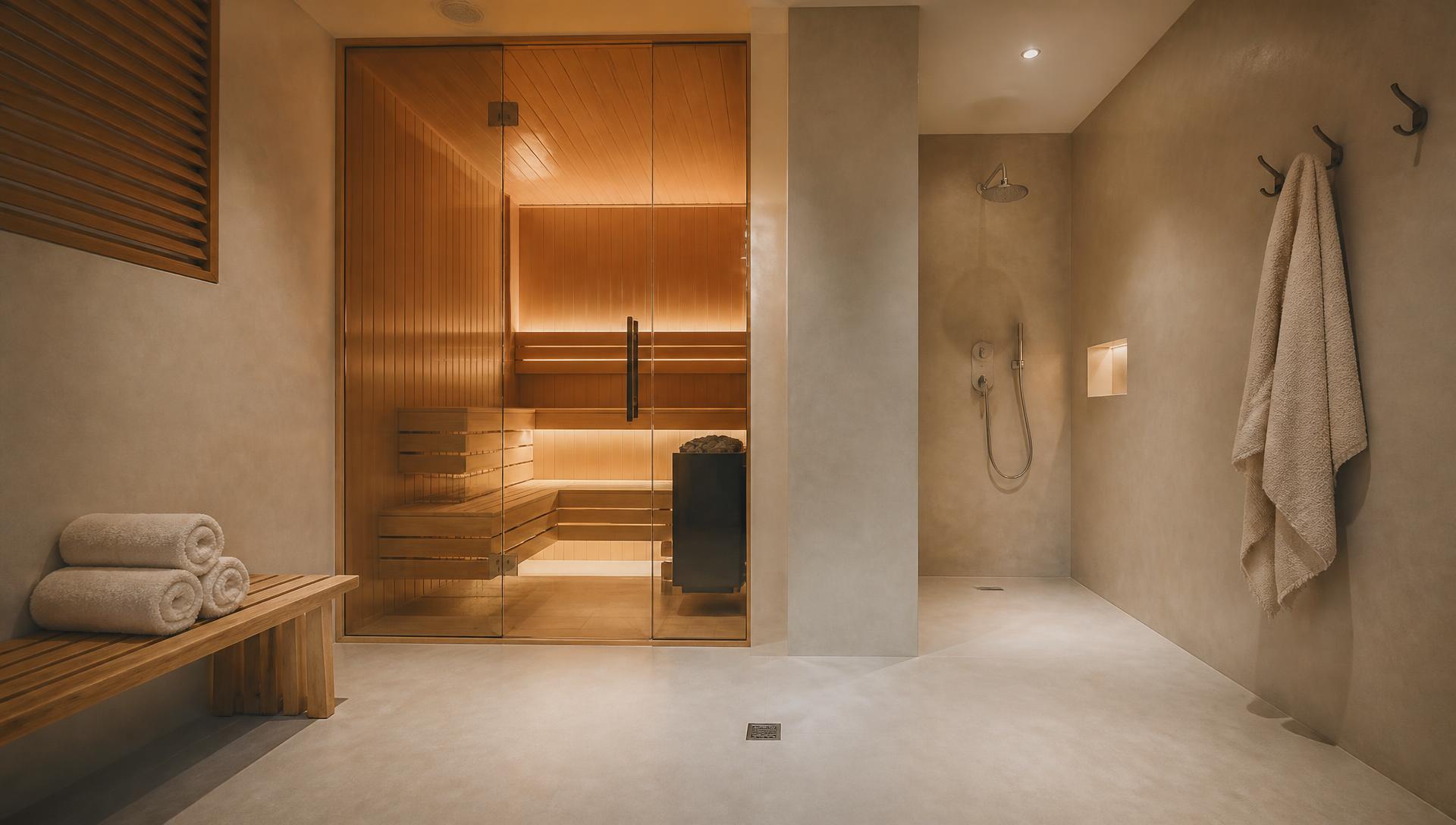
Ventilation is what makes a sauna comfortable rather than stifling, and it is what allows the room and its timber to dry between sessions. It is designed as a pair of openings — an intake and an outlet — positioned so that air actually moves through the room rather than sitting in it.
Treat ventilation as part of the specification you are buying, not an afterthought. Ask the supplier to show intake and outlet positions on a drawing and to explain how the room dries after use.
Electrical, plumbing and drainage considerations
Sauna heaters are a significant electrical load and are installed to specific manufacturer requirements. Any electrical work must be designed and carried out by a suitably qualified electrician who can confirm what your property's supply and consumer unit will accommodate. Do not assume an existing socket circuit is suitable.
If you are adding a shower, cold plunge or wet area alongside the sauna, drainage and tanking need to be designed together with the floor build-up. Water management is far cheaper to solve on a drawing than after tiling.
NEATLY does not publish electrical, plumbing, building-regulations or planning requirements. Requirements vary by property and change over time — confirm them with a qualified professional and your local authority before work begins.
Materials and interior finish
Timber choice affects how the room smells, how it feels to touch at temperature, how it ages and how it is maintained. Softwoods and hardwoods behave differently, and the species used for benches — the surface you are actually in contact with — is worth specifying separately from the wall cladding.
Ask what is used where: wall lining, ceiling, bench frames, bench tops, backrests, door and frame. Ask how each is finished, and what the manufacturer recommends for cleaning, because the wrong product can permanently mark untreated timber.
- Timber species for cladding and for benches, stated separately
- Whether benches are removable for cleaning underneath
- Door glazing, handle materials and how the door seals
- Lighting: position, rating and whether it is dimmable
- Heater guard, floor protection and any stone specification
Capacity, layout and how it will really be used
Nominal capacity and comfortable capacity are rarely the same. A cabin described as seating four may seat four upright, and two lying down. Decide first whether lying down matters to you, because it sets the minimum bench length and often the whole cabin footprint.
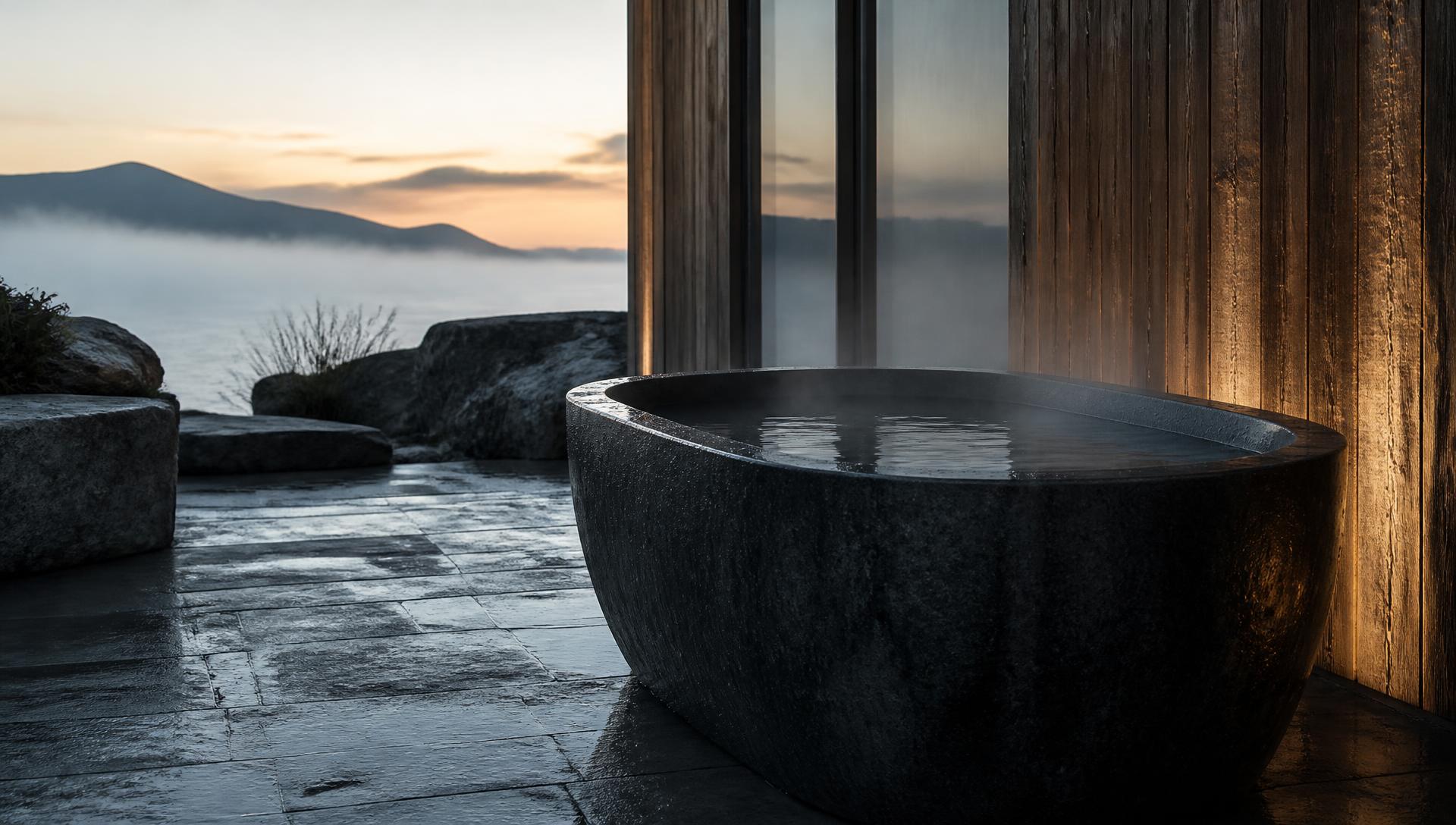
Think about the sequence of a session: where clothes go, where towels go, where you cool down, whether you want a shower or plunge adjacent, and how wet feet get from one to the other. Those adjacencies are what make a wellness space feel considered.
Privacy, placement and aesthetics
Glazing is what makes a modern sauna feel generous, and it is also what makes placement sensitive. Consider sightlines from neighbouring windows and gardens, and how the cabin reads from the rest of the room or garden when it is not in use.
A sauna is a large, permanent object. Choose finishes that sit with the surrounding room rather than treating it as a standalone product.
Maintenance and aftercare
Routine care is mostly ventilation, drying and cleaning to the manufacturer's instructions, plus periodic checks of the heater and any stones. The parts that need occasional replacement should be identified before purchase, along with how easily they can be sourced in the UK.
- Recommended cleaning method and products for each surface
- Expected consumable and wear parts, and their availability
- Servicing intervals for the heater and control system
- What happens if a control panel or sensor fails

Budget planning
Plan the budget in layers rather than as a single figure: the cabin and heater, the preparatory works, the services, the finishes and the aftercare. Most unpleasant surprises come from the preparatory and services layers, which suppliers may quote for differently or exclude altogether.
Set aside contingency for what is uncovered once work starts, particularly in older properties or where an existing room is being converted.
How to compare quotations properly
Quotations only become comparable once the scope is written down. Send every supplier the same measured brief and the same list of questions, then compare like for like rather than headline totals.
- Exactly what is included, and what is explicitly excluded
- Who is responsible for electrical design, installation and certification
- Whether groundwork, making good and waste removal are included
- Lead time, installation duration and disruption
- Warranty length and scope for the cabin, heater and controls, stated separately
- What the supplier's obligations are if a fault occurs after installation
Checklist
Before you contact a supplier
Have these ready and every quotation you receive becomes comparable.
- Measured room dimensions including ceiling height, and a note of where the door must swing.
- A photograph of the full access route, with the narrowest doorway or turn measured.
- Written confirmation from a qualified electrician of the supply available at the location.
- How the space is ventilated today, and what the supplier proposes to change.
- What the floor is, and how water will drain or dry after use.
- Whether the quotation is supply-only or includes installation, and precisely where that line falls.
- Guarantee length and scope, servicing intervals, and how long replacement parts stay available.
- Who attends a fault, and whether your address is inside their service area.
Questions NEATLY would ask
Questions to ask a sauna supplier
- 1.What heater output are you proposing for this room volume, and why?
- 2.Where will the intake and outlet ventilation be positioned?
- 3.What electrical supply does this require, and who certifies the installation?
- 4.What is the delivery route requirement, and have you checked our access?
- 5.Which timber is used for benches, and how should it be cleaned?
- 6.What is covered by the warranty, for how long, and who honours it?
- 7.Which parts are consumable, and how are replacements sourced?
Editorial methodology
NEATLY has not physically tested the equipment discussed in this guide. This is a decision framework built from publicly documented buyer considerations, written to help you ask better questions of a supplier. This guide contains no affiliate links and no merchant relationship. Where a decision depends on regulation, structural capacity or personal health, we say so and recommend qualified professional advice rather than answering it for you. Read our full editorial standard.
Imagery on this page is original artwork owned by NEATLY, depicting generic environments. No retailer or manufacturer creative is used. Last reviewed 8 August 2026.
Continue
Flagship pillar
Luxury Home Wellness
Create a private wellness space that actually gets used
Explore the pillarLuxury Home Wellness · 9 minute read
Indoor vs Outdoor Saunas: What to Consider Before Investing
Indoors or outside changes the cost profile, the disruption and how often you actually use it.
Read the guide
Premium Outdoor Living · 11 minute read
Creating a Luxury Wellness Garden: Saunas, Cold Plunges & Hot Tubs
Plan the sequence between hot, cold, shelter and rest before you price a single cabin.
Read the guide