Premium Outdoor Living · 11 minute read
Creating a Luxury Wellness Garden: Saunas, Cold Plunges & Hot Tubs
A wellness garden is a small piece of landscape design. The equipment is the easy part; the sequence between hot, cold, rest and shelter is what makes it work.
The gardens that get used are the ones where the journey makes sense: somewhere to change, a short covered route between hot and cold, somewhere sheltered to sit afterwards, and lighting that makes it pleasant in the dark half of the year.
This guide covers how to plan that as one project rather than three separate purchases.
“The equipment is the easy part. The route between hot, cold and rest is what decides whether the garden gets used in February.”
Design the sequence first
Sketch the order of use before you choose any equipment: arrive, change, heat, cool, rest, repeat, leave. Then place each element so that the distance between hot and cold is short, and the rest area is sheltered and out of the wind.
Distances that look trivial on a plan feel very different barefoot in February. Keep the hot-to-cold route direct, level and non-slip.
Zoning the garden
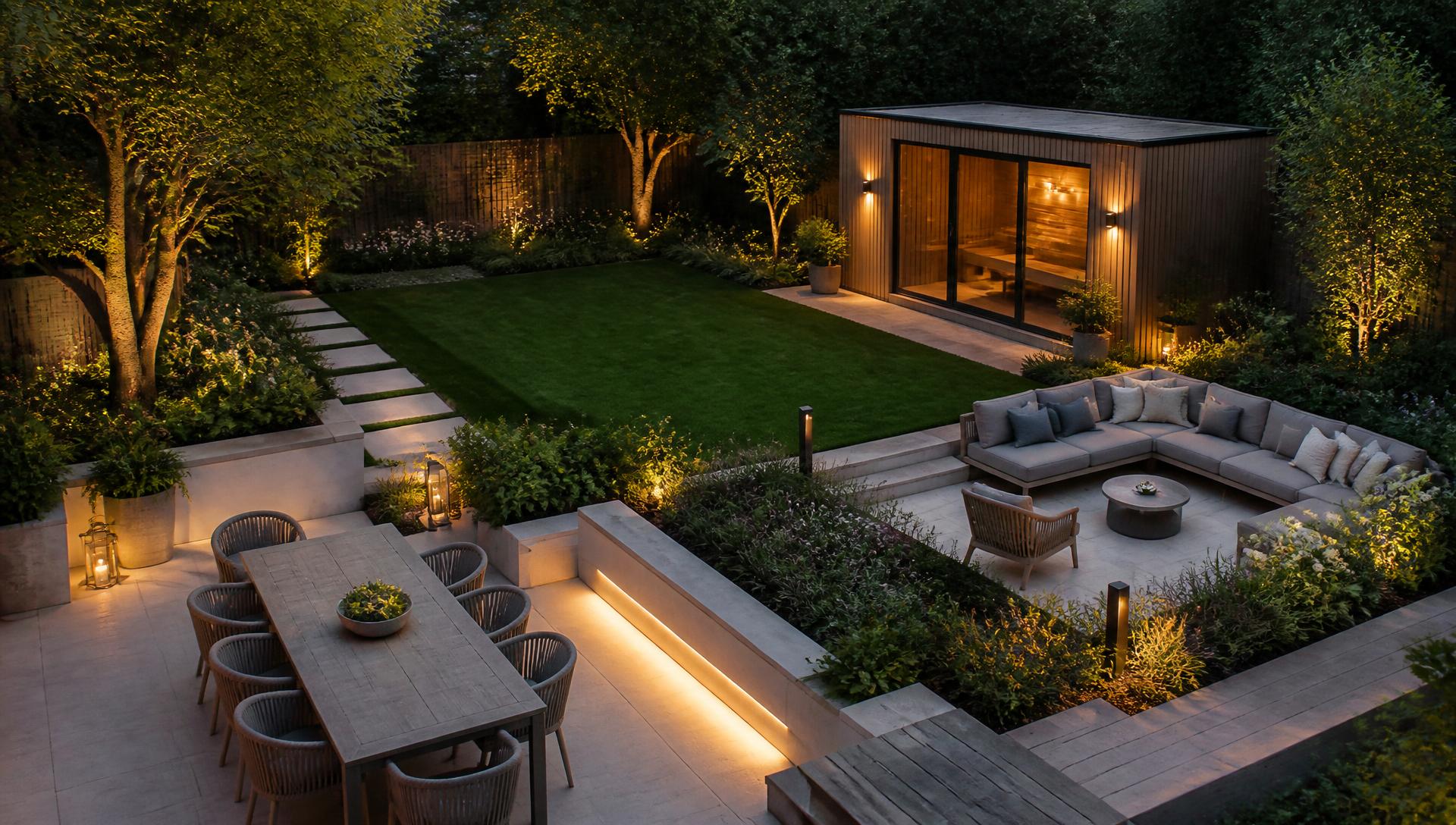
- Wellness zone: sauna, plunge or hot tub, grouped tightly together
- Transition zone: changing, towels, storage, somewhere to put a drink down
- Rest zone: sheltered seating, ideally with a different outlook
- Circulation: how the wellness area is reached without crossing the whole garden
- Service zone: equipment housing, covers, chemicals where relevant, and access for maintenance
Groundwork, levels and drainage
Every element here is heavy, and water leaves each of them at some point. Bases must be prepared to the manufacturer's specification, levels should move water away from the house and from seating areas, and surfaces need to remain safe when wet.
Plan where splash-out and emptying water will go before anything is installed. Retro-fitting drainage around a filled hot tub is not a small job.
Base specifications, drainage strategy and any consenting requirements are property-specific. Confirm them with your supplier, a qualified professional and your local authority.
Services in the garden
Power, and sometimes water, has to reach the wellness zone. The route, the depth, the protection and the design are all matters for a suitably qualified electrician, and the practical cost is driven by distance and ground conditions.
Establish the services strategy before you finalise positions. It is common for a position to move a few metres once the supply route is understood, and that is much cheaper to discover on paper.
Shelter, structure and year-round use
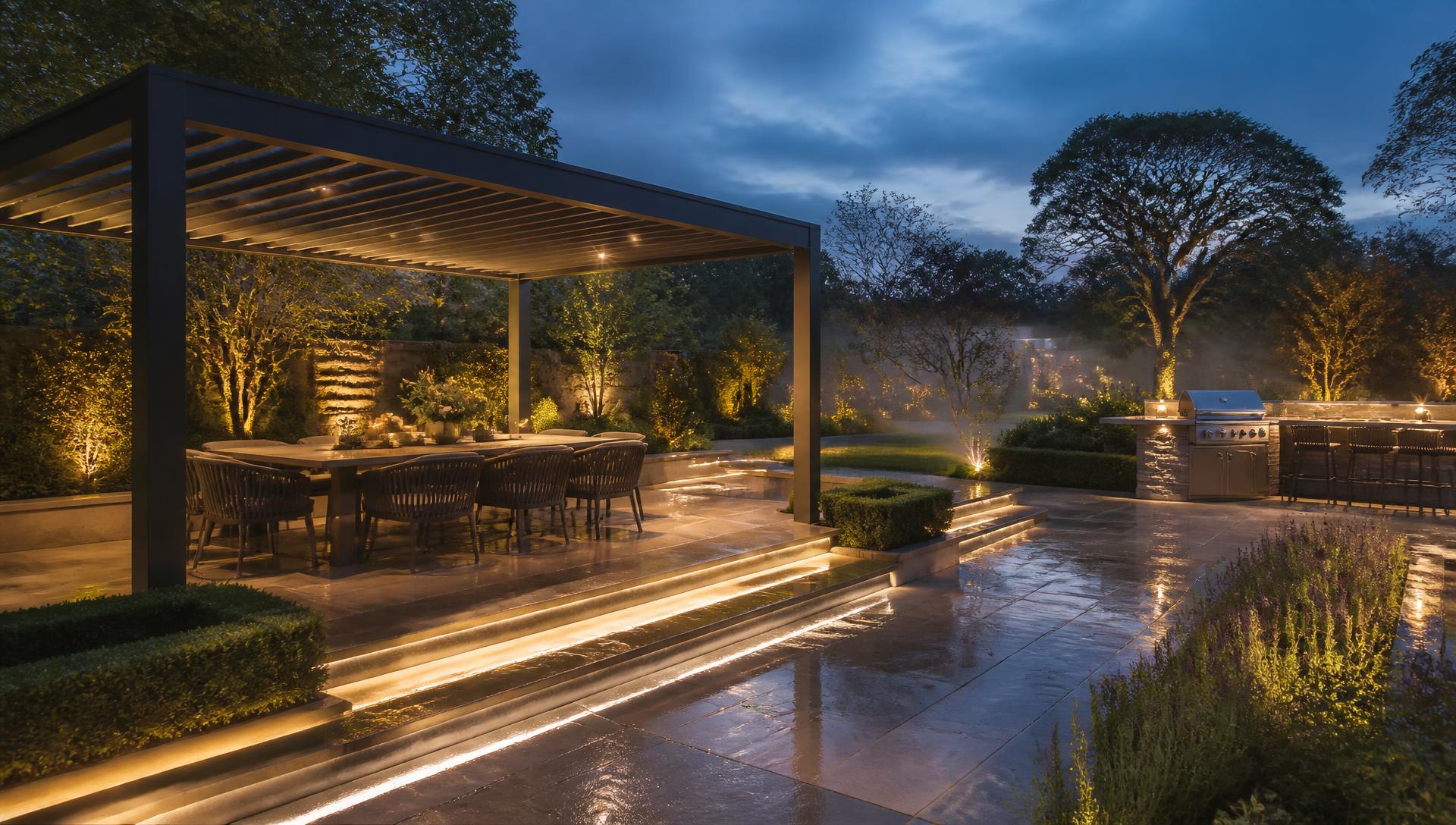
Shelter is what turns a summer feature into a year-round one. A covered approach, a pergola or louvred roof over the rest area, and a wind-screened corner extend the usable season far more than a larger cabin would.
Consider snow and wind loading for any structure, and whether covers and cushions have somewhere dry to live in winter.
Privacy, neighbours and noise
Wellness gardens involve people moving between hot and cold in the open. Plan screening, planting and glazing orientation for how the space will actually be used, and think about lighting spill and equipment noise towards boundaries.
Where boundary treatments, structures or equipment placement may be subject to local rules, check with your local authority rather than assuming.
Cold plunge and hot tub practicalities
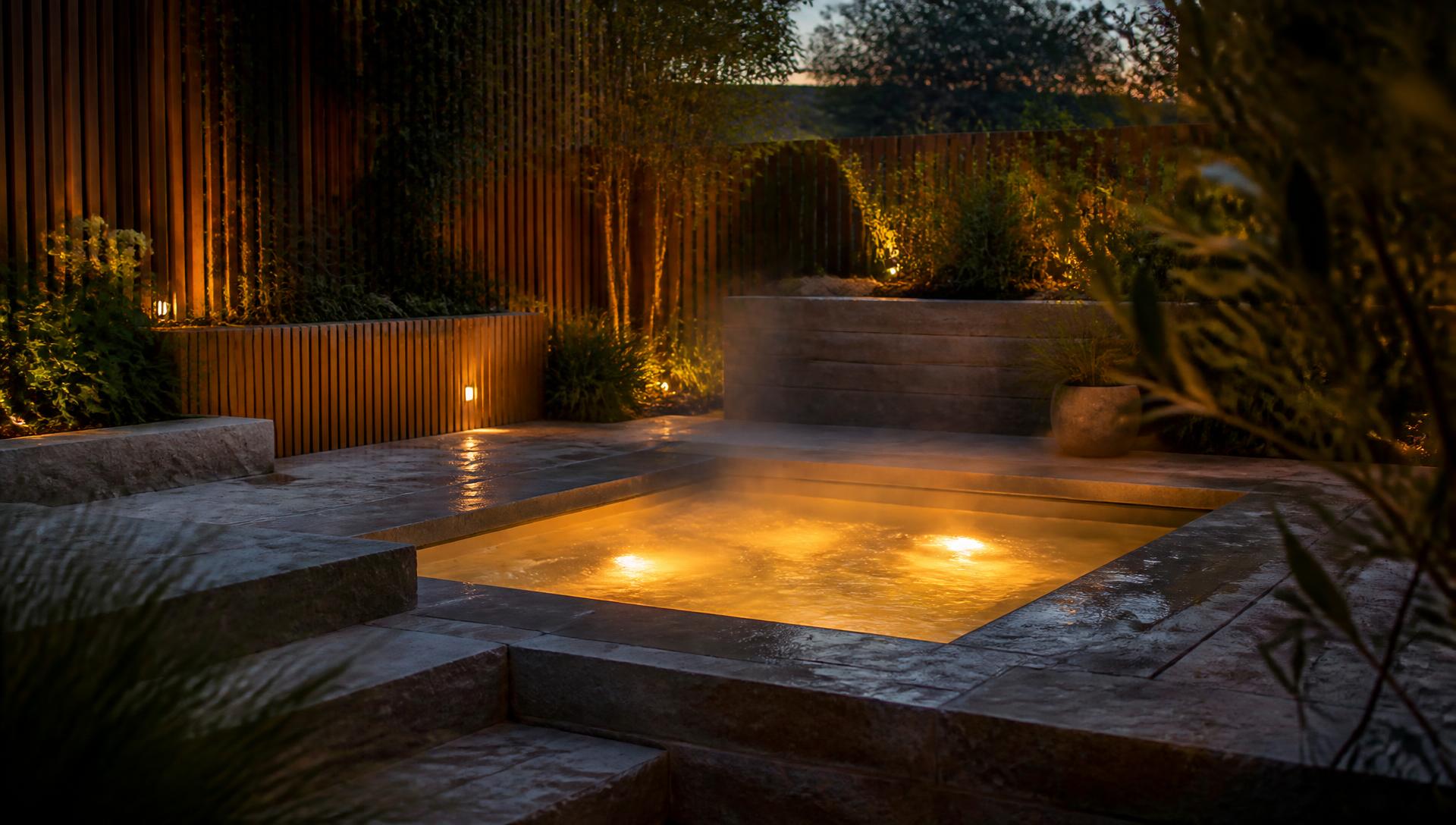
Cold water equipment involves a chilling and filtration system that needs somewhere to sit, ventilate and be serviced. Hot tubs need access on all sides for maintenance, a plan for water changes and somewhere for the cover to go when it is off.
Ask suppliers what routine care actually involves week to week, and what happens in a hard frost.
NEATLY does not make health or therapeutic claims about heat or cold exposure. Cold immersion in particular is not suitable for everyone — if you have any cardiovascular or other health condition, or are pregnant, seek advice from a suitably qualified healthcare professional first, and do not use cold water alone.
Materials, planting and how it looks in winter
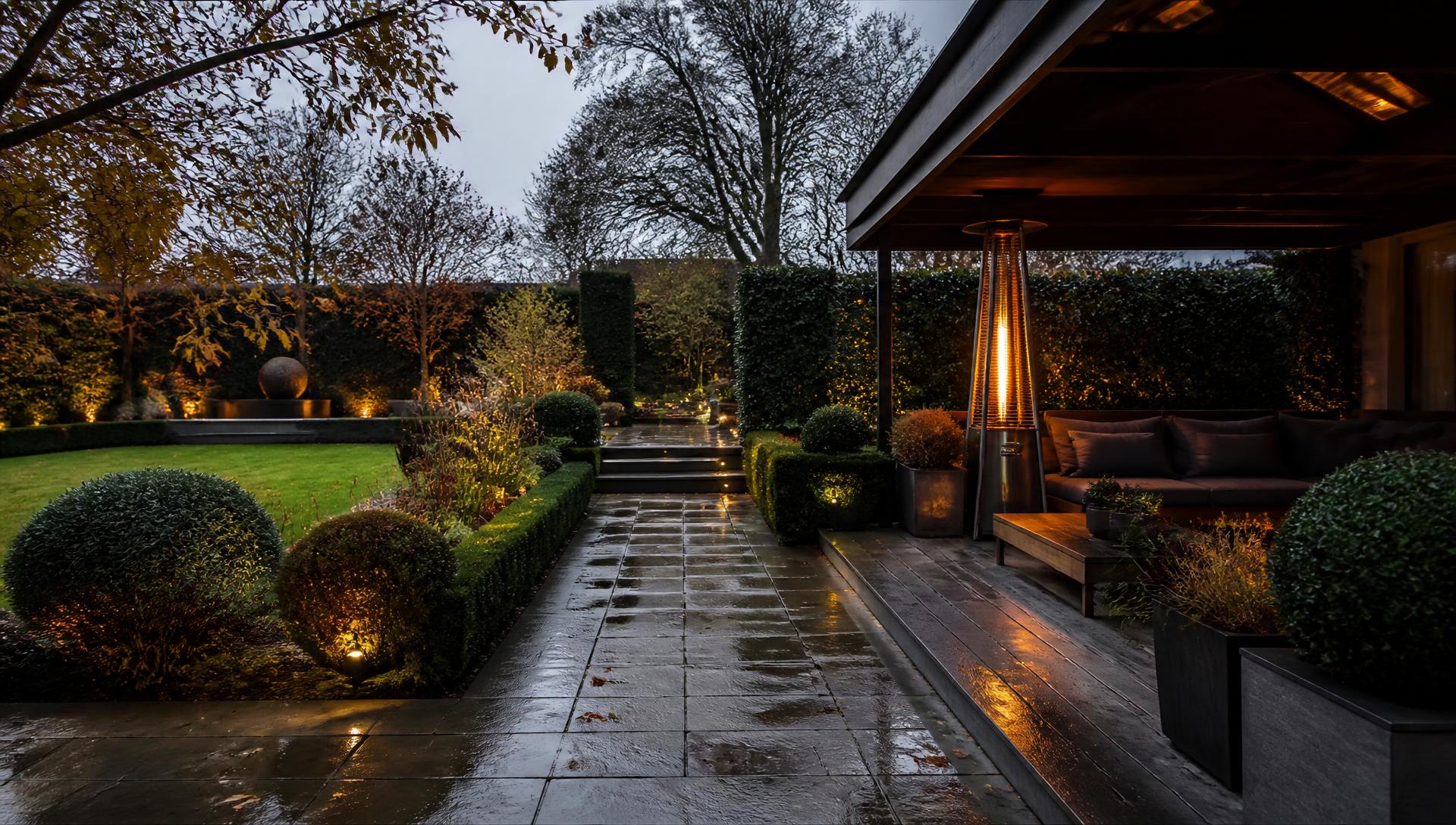
Choose surfaces that stay safe wet, timber and metals that tolerate constant moisture, and planting that still gives structure in January. Evergreen screening earns its place in a wellness garden in a way it does not elsewhere.
Lighting
Light the route, not the objects: steps, edges, thresholds and the transition between hot and cold. Keep levels low and warm so the space stays restful, and make sure switching is possible from both ends of the journey.
Maintenance and aftercare
- Weekly, monthly and seasonal routines for each piece of equipment
- Winter procedure — including what must not be left standing in frost
- Access required around each unit for servicing
- Which parts are consumable, and how quickly they can be sourced
- Warranty length and scope for equipment, structure and installation, stated separately
Budget planning and comparing quotations
Split the budget into landscape works, structures, equipment, services and aftercare. Suppliers commonly quote for different combinations of these, which is what makes headline totals misleading.
Give every supplier the same written brief, the same plan and the same question list. Compare inclusions, exclusions, responsibilities and warranty scope before comparing price.
Checklist
Before you contact a supplier
Have these ready and every quotation you receive becomes comparable.
- A scaled plan of the garden showing levels, existing surfaces and the position of drains, meters and boundaries.
- Photographs of the access route from the road to the intended location, including gate widths and any steps.
- The intended sequence: where you change, where you heat, where you cool and where you sit afterwards.
- Confirmation of what groundwork is included in the quotation and what is expected to be done by others.
- Who is responsible for electrical and water connections, and which parts require a qualified installer.
- Written detail of guarantee scope, servicing intervals and parts availability.
- How the equipment is winterised and drained down, and whether that is an owner or supplier task.
Questions NEATLY would ask
Questions to ask a wellness garden supplier
- 1.What base and levels does each piece of equipment require?
- 2.Where does splash-out and emptied water go?
- 3.What is the services route, and who designs and certifies it?
- 4.How much access is needed around each unit for servicing?
- 5.What is the winter procedure for each item?
- 6.What is included in the landscape works, and what is excluded?
- 7.What is the warranty for equipment, structure and installation separately?
Editorial methodology
NEATLY has not physically tested the equipment discussed in this guide. This is a decision framework built from publicly documented buyer considerations, written to help you ask better questions of a supplier. This guide contains no affiliate links and no merchant relationship. Where a decision depends on regulation, structural capacity or personal health, we say so and recommend qualified professional advice rather than answering it for you. Read our full editorial standard.
Imagery on this page is original artwork owned by NEATLY, depicting generic environments. No retailer or manufacturer creative is used. Last reviewed 8 August 2026.
Continue
Pillar
Premium Outdoor Living
Make the garden usable far beyond a good summer
Explore the pillar
Luxury Home Wellness · 12 minute read
The Complete Guide to Creating a Luxury Home Sauna
Space, access and services decide this project long before the timber does. Here is the order to work in.
Read the guide
Luxury Home Wellness · 9 minute read
Indoor vs Outdoor Saunas: What to Consider Before Investing
Indoors or outside changes the cost profile, the disruption and how often you actually use it.
Read the guide